

The Reality: Traditional Transmission Is Becoming a Bottleneck
In many industrial systems, engineers are facing the same challenges:
- Components wear out over time
- Particle contamination affects product yield
- Noise and vibration reduce system stability
- Frequent maintenance leads to costly downtime
The root cause is simple:
👉 All conventional transmission systems rely on mechanical contact
Whether it’s gears or belts, contact inevitably leads to:
- Friction
- Wear
- Contamination
That’s why, in industries such as semiconductors, vacuum systems, and advanced manufacturing, more companies are turning to a different approach:
👉 Magnetic Transmission

What Is Magnetic Transmission? (The Core Idea)
The concept is straightforward:
Torque is transmitted through magnetic fields instead of physical contact.
This means:
- No physical wear
- No lubrication required
- No particle generation
The two most established solutions are:
- Magnet Gear
- Magnet Coupling
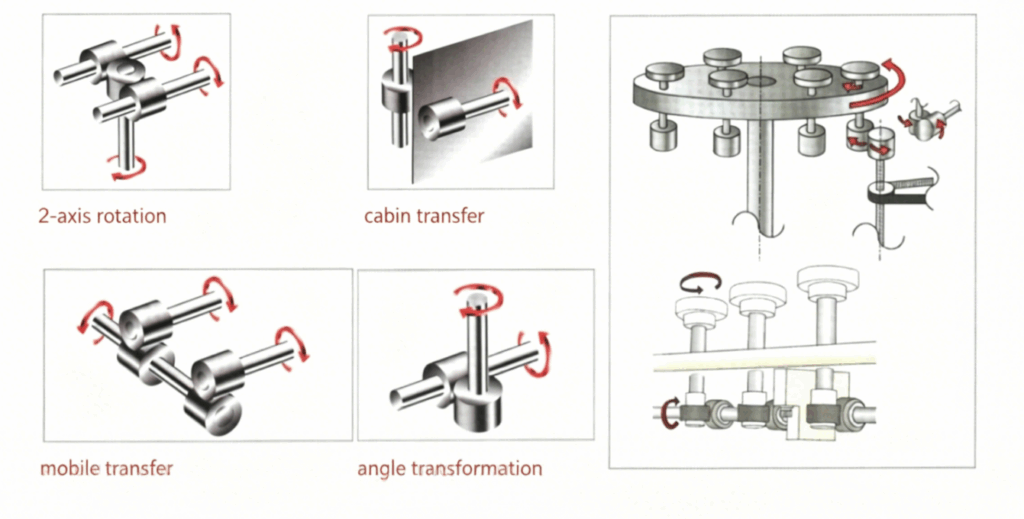
Magnet Gear: Not Just a Replacement—An Upgrade
Magnet gears are not simply “quieter gears.”
They represent a fundamentally different transmission mechanism.
Why engineers are adopting them:
✔ No Wear = Longer Service Life
No contact means no wear, significantly extending system lifespan.
✔ No Particles = Higher Yield
Critical for cleanroom and semiconductor environments.
✔ Built-in Overload Protection
The system naturally slips under excessive torque, preventing damage.
✔ Low Noise Operation
Ideal for vibration-sensitive systems.
✔ Vacuum Compatibility
Can operate reliably in environments down to ≤10⁻⁵ Pa.
👉 For many customers, this is not just a technical upgrade—
it’s a way to reduce total cost of ownership (TCO).
Magnet Coupling: Solving the “Sealing + Transmission” Challenge
If your system requires:
- Fluid isolation
- Vacuum sealing
- Zero leakage
Then traditional mechanical seals often become a weak point.
Magnet couplings solve this by:
👉 Transmitting torque through a physical barrier
Key benefits:
✔ Zero-Leakage Design
Ideal for chemical, pharmaceutical, and food applications.
✔ No Mechanical Seal Wear
Reduces maintenance and replacement costs.
✔ Higher System Reliability
Especially in continuous operation environments.
✔ Lower Vibration and Noise
👉 For many Western customers, this directly translates into:
higher safety standards + lower maintenance costs + longer uptime
Engineering Perspective: What Really Matters in Selection
In real projects, the key question is not “how it works,” but “will it work for my application?”
Key parameters include:
- Air Gap → Directly impacts torque output
- Torque Requirement
- Speed (RPM)
- Temperature
- Material Selection
- NdFeB (high performance)
- SmCo (high temperature, up to 300°C)
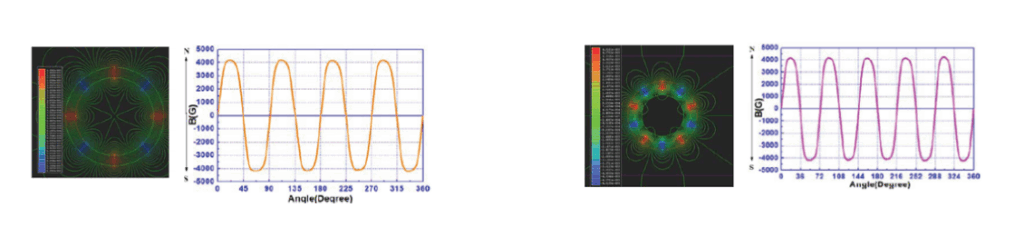
👉 With optimized magnetic circuit design, torque can be improved by 20% or more.
At Hangzhou Yiji Technologies, we typically provide:
- Simulation and calculation
- Design optimization
- Custom-engineered solutions
Typical Applications (What Customers Care About Most)
Magnetic transmission is rapidly being adopted in:
- Semiconductor equipment
- Vacuum pumps and chambers
- Cleaning systems
- Conveyor and automation systems
- Medical and pharmaceutical equipment
- Food processing lines
- Automotive and aerospace systems
A Practical Conclusion
Magnetic transmission is not for every application.
But in the following scenarios, it is often the better solution:
✔ Clean environment required
✔ Zero leakage needed
✔ High maintenance costs
✔ Downtime is expensive
👉 In these cases, magnetic solutions typically deliver:
lower long-term cost + higher reliability